GROWING WITH HEMP: OUR REGENERATIVE JOURNEY FROM SEED TO CULTURE
Eight years ago, we planted our first seeds — not just in soil, but in vision. We believed that industrial hemp (Cannabis sativa L.), a plant with deep roots in Anatolia, could help us regenerate not only our lands, but our industries, our imagination, and our communities. Today, this vision is growing — but to fully blossom, it needs land, collaboration, and bold creative action.
FROM SOIL TO ART: WHY WE CHOSE HEMP
Hemp is one of nature’s most generous gifts. Research confirms that industrial hemp sequesters 8-15 tonnes of CO2 per hectare annually, with some studies reporting up to 22 tonnes — significantly outperforming forests that typically capture 2-6 tonnes per hectare per year. Hemp grows to maturity in just 3-4 months, reaching up to 4 meters in 100 days, making it one of the fastest CO2-to-biomass conversion tools available.
The plant’s deep root system penetrates 1-1.5 meters into soil, naturally aerating and improving soil structure while breaking up compacted earth. Field research from Russia’s Kendir studies documented 8.89 tonnes of biomass per hectare, with stems depositing 2.85 tonnes of carbon per hectare (70.7% of total carbon uptake). Hemp’s natural pest resistance eliminates the need for pesticides, while its minimal water requirements — requiring only 300-500 liters per kilogram of fiber compared to cotton’s 20,000 liters — make it exceptionally resource-efficient.
From its stalks come paper (one hectare produces more paper than four hectares of trees), insulation, bioplastics, textiles, and hempcrete. Hempcrete sequesters 35 kg of CO2 per square meter over a 100-year lifespan while requiring 260 MJ less energy than equivalent concrete walls. Its seeds provide complete protein with optimal omega-3 and omega-6 ratios. Its fibers, containing 57-77% cellulose, outlast centuries.
But despite this scientifically documented promise, growing hemp in Türkiye still faces practical challenges: limited land, siloed supply chains, outdated perceptions. The only way we’ve seen to activate its potential is to build bridges — between farmers and artists, researchers and architects, producers and storytellers.
WHY EXPANDING HEMP CULTIVATION MATTERS
To shift from niche to impact, we need more land growing better hemp — especially varieties adapted to regenerative agriculture and local ecosystems. But land use doesn’t shift without economic demand.
That’s why we focus on cross-sector adoption. Hemp must be desired by multiple industries — not for its novelty, but for its performance and ecological value.
Here are sectors where hemp demonstrates measurable advantages:
TEXTILES: Comparative life cycle assessment reveals hemp fiber production creates 69.6 kg N eq. less eutrophication, 6,529 kg CO2 eq. less global warming potential, and 50 kg SO2 eq. less acidification per hectare compared to cotton. Hemp fabric demonstrates three times the tensile strength of cotton, offers UV protection, exhibits antibacterial properties (eliminating Staphylococci, Coli, and Candida within hours), and becomes softer with each wash while maintaining structural integrity.
CONSTRUCTION: A 260mm thick 1 m² hemp-lime wall requires 394 MJ of energy and sinks 35 kg CO2 over 100 years, whereas Portland cement-based equivalent walls require 560 MJ of energy with an additional release of 52.3 kg of CO2. Hempcrete provides carbon-negative, fireproof, and insulative properties ideal for circular construction.
HEALTH & WELLNESS: Hemp seeds contain optimal essential fatty acid ratios, minerals (K, P, S, Mg, Fe, Ca, Zn), and vitamins (PP, B1, B2, B3, B6, C, E, beta-carotene). Hempseed oil supports cardiovascular health and skin regeneration with complete amino acid profiles.
WATER EFFICIENCY: Hemp demonstrates 38% lower crop water requirement, 60% lower water footprint, 84% lower crop irrigation requirement, and 91% lower irrigated water footprint compared to cotton. Hemp produces 2,650 pounds of fiber per acre compared to cotton’s 1,190 pounds while using dramatically less irrigation.
SOIL REGENERATION: Hemp cultivation integrated with regenerative agriculture practices enhances soil health through deep root systems, increases carbon sequestration by 8.9-12.3 metric tons per hectare, promotes beneficial soil microorganisms, and provides phytoremediation for contaminated soils. Long-term studies show soil organic carbon increases of 25.8 tonnes per hectare over 100 years when hemp residues are left as soil amendments.
BIOPLASTICS & COMPOSITES: Hemp’s high cellulose content (57-77%) and fiber strength make it suitable for replacing fibreglass composites and aluminum in automotive parts, construction panels, and packaging, requiring only 15-60% of the energy inputs of conventional materials.
For these industries to truly transition, they need more than material samples — they need real supply chains with verified performance data and economic feasibility studies.
OUR LONG ROAD TO NOW
We began our research in 2017, cultivating heirloom hemp varieties and running trials across Anatolia. Our work focused on preserving genetic diversity through our seed bank — collecting, storing, and cultivating traditional hemp strains passed down through generations of Turkish farmers. These heirloom seeds offer not just agricultural resilience but cultural heritage preservation.
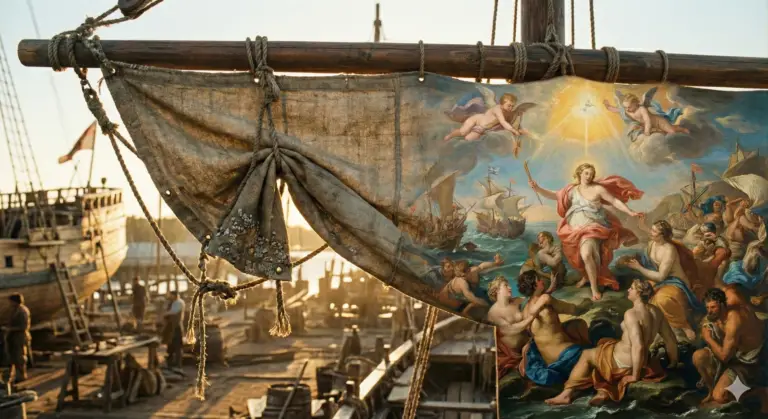
In 2018, we partnered with artist Gizem Renklidağ and others to test the first hemp canvases in Türkiye. The results were promising — raw, textural, alive, connecting to historical precedent where Renaissance Venice transformed maritime sailcloth into artistic canvas, fundamentally reshaping how art was created and preserved.
Then the pandemic arrived. Lockdowns, shifting priorities, the founding of Hasat Kooperatifi, and the emergence of new startups paused the canvas project — but deepened our commitment.
Instead of giving up, we expanded our efforts through documented R&D initiatives:
Conducting research on fiber retting processes, paper pulping techniques, and natural dyeing methods with measurable quality outcomes.
Supporting local farmers through cooperative growing models across 3.6 hectares in Mecitözü, Çorum, implementing no-till methods, crop rotation, natural composting, and organic fertilizers to restore soil carbon and boost biodiversity.
Designing bioregional infrastructures like the Hemp Dome and decentralized fiber processing hubs to create localized supply chains.
Developing open-source processing techniques to strengthen the entire hemp supply chain in the region, ensuring economic and environmental benefits are widely distributed.
Yet through it all, we felt something was missing: expression.
BIOMATERIALS AS CULTURE: A COLLECTIVE AWAKENING
We now realize: crafting biobased materials is not just about sustainability metrics — it’s about cultural awakening. Creating from hemp is an act of resistance, remembrance, and reimagination. It challenges the fossil-based logic of modern production systems and invites deeper intimacy with Earth’s regenerative cycles.
The global textile recycling market projects growth from $5.76 billion (2023) to $8.49 billion by 2032, with European textile recycling representing €3.5-4.5 billion annual economic impact. Yet only 1% of textile production becomes new fibers despite 70% technical recyclability. This gap represents massive untapped potential for hemp-based circular systems.
This is why we’re returning to the canvas — not as a metaphor, but as a platform for transformation validated by historical precedent. Renaissance Venice’s adaptation of hemp sailcloth into artist canvas created the material foundation for an artistic golden age. That same regenerative principle — transforming available materials into cultural value — guides our work today.
In 2025, Art on Hemp becomes the seed of a cultural movement. We’ve joined hands with visionaries like Emir Barın, Tuba Kocaturk, and other artists, designers, and storytellers to build a new language of regeneration grounded in material science and creative expression.
We’re sourcing heirloom seeds from our preserved genetic library.
We’re weaving canvas from scratch using documented traditional techniques.
We’re inviting artists to explore this living material with its inherent carbon sequestration, tensile strength, and historical resonance.
Because when we create with hemp, we don’t just make art — we demonstrate how small acts of material regeneration cascade into transformative cultural change, following the same pattern that enabled the Renaissance.
WHAT’S NEXT — AND HOW YOU CAN SUPPORT
This is only the beginning. For this movement to scale from pilot projects to regional transformation, we need:
LANDOWNERS AND FARMERS willing to grow regenerative hemp across Turkey’s three main agricultural regions (Aegean, Mediterranean Coast, and Southeast Anatolia) where soil conditions and climate support hemp cultivation with minimal irrigation.
INDUSTRY PARTNERS ready to test hemp-based inputs with documented performance requirements, creating demand that justifies expanded cultivation and processing infrastructure.
DESIGNERS AND BUILDERS working with biomaterials who can specify hemp products in projects, providing market validation for carbon-negative construction materials and textiles.
ARTISTS AND EDUCATORS to expand cultural narratives around regenerative materials, demonstrating that sustainability and creative excellence are complementary rather than competing values.
FUNDERS AND FOUNDATIONS to support shared processing infrastructures, research initiatives, and market development programs that enable the transition from niche production to viable supply chains.
And above all, we need people like you — who believe in a more beautiful, resilient, and grounded world built on measurable regenerative impact rather than extractive systems.
Contemporary circular economy models demonstrate this approach works at scale: Interface Inc. achieved $450 million in avoided waste costs over 17 years with 84% manufacturing waste reduction. TerraCycle diverts 5 billion pieces from landfills annually, generating $71 million revenue. Patagonia’s Worn Wear program generates over $1 million annually through recommerce. These models prove profitable waste-to-value transformation is achievable.
Hemp cultivation in Turkey can follow this regenerative pathway — transforming underutilized agricultural land into carbon-sequestering production systems while creating economic opportunities for rural communities and material alternatives for industries seeking to reduce environmental impact.
Let’s grow it together.
RESEARCH SOURCES & DATA CITATIONS
Carbon Sequestration Research:
- Sativa University Environmental Benefits Study (2025)
- Australian Parliament Hemp Carbon Farming Report
- Cambridge University Centre for Natural Material Innovation (Darshil Shah, 2021)
- Hemp Carbon Standard Regen Ag Methodology (2025)
- Russian Federation Hemp Carbon Deposition Study (2024)
Water & Resource Efficiency Studies:
- Journal of Agrometeorology Comparative Water Footprint Study (2023)
- ScienceDirect Industrial Hemp Fiber Sustainability Analysis (2020)
- Stockholm Environment Institute Ecological Footprint Report (2005)
- Frontiers Environmental Impact Assessment (2024)
Life Cycle Assessment Research:
- ScienceDirect Comparative LCA: Hemp vs Cotton Textile Fiber (2025)
- ScienceDirect Hemp Hurds Energy Assessment (2020)
- PMC Hemp as Sustainable Raw Material Review
Technical & Processing Studies:
- Stroud Water Research Center Hemp Cultivation Study (2023)
- PMC Hemp Fibre Properties and Processing Review
- Cultural Heritage Conservation Studies on Historical Hemp Canvas
Circular Economy Case Studies:
- McKinsey Textile Recycling in Europe Report
- Interface Inc. Sustainability Case Studies
- TerraCycle Business Model Documentation
Turkish Agricultural Context:
- Turkey Regenerative Cotton Feasibility Study (Regional Analysis)
- Decentralize Hemp Mecitözü Project Documentation
- Kendir Hemp Project Reports